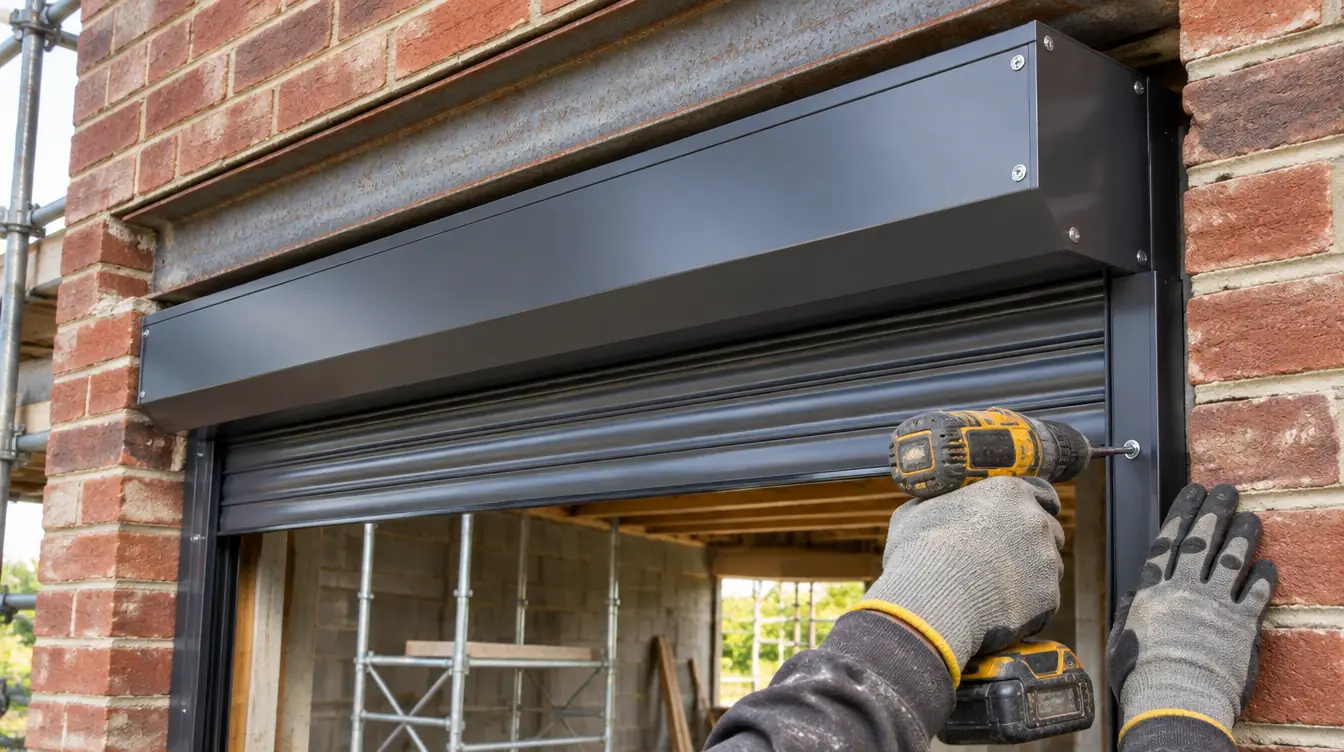
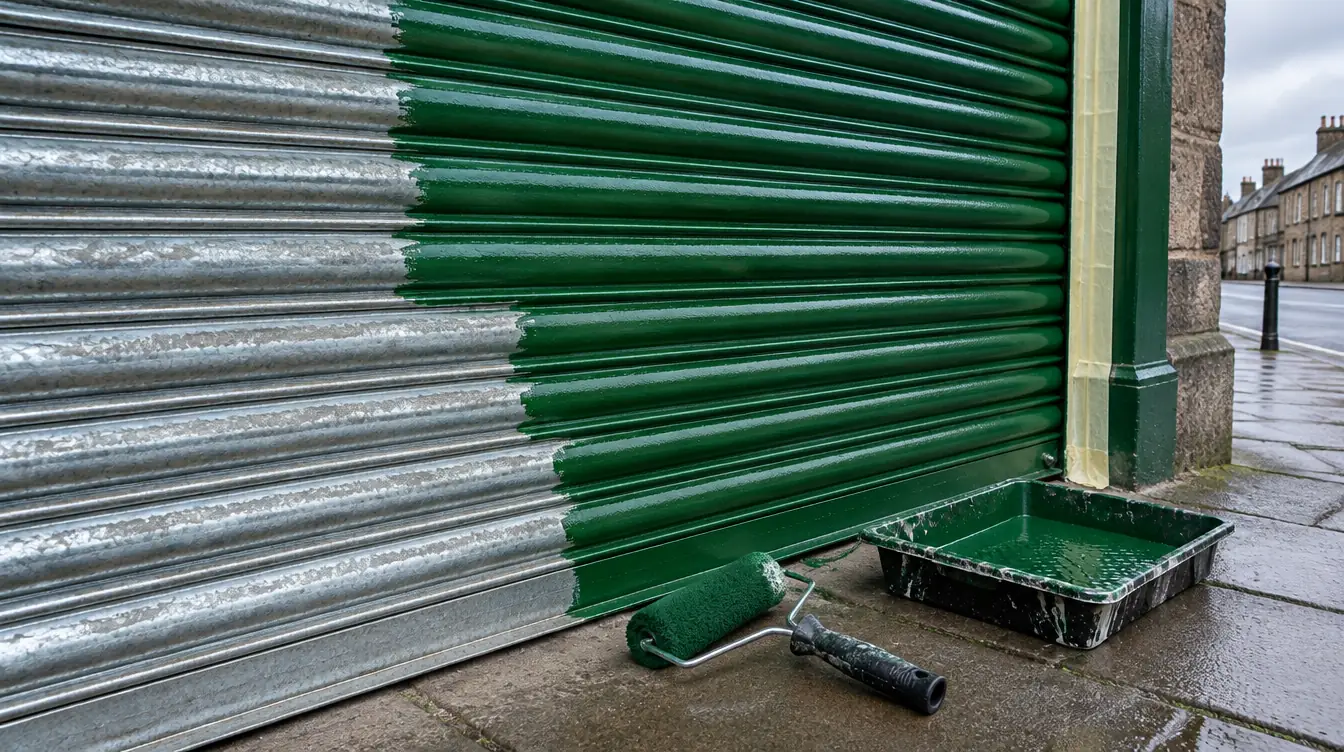
Yes, you can paint a steel or aluminium roller shutter, but it needs the right preparation and the right paint. Bare galvanised steel and aluminium need a suitable primer so the paint grips, and the finish has to flex as the curtain rolls up. Paint applied badly will crack, flake and can even make the shutter stiff to operate. For a long-lasting colour, a factory powder coated finish is usually the better choice.
A tired, grey or graffiti-marked shutter can drag down the look of an otherwise smart shopfront. Painting it seems like the obvious fix, and it can work well. The catch is that a roller shutter is not a flat, static surface like a door or a wall. It coils up tightly every day, slides in steel guide rails and is exposed to everything the Scottish weather can throw at it. That changes how you need to approach the job.
What is your shutter made of?
Before you buy any paint, find out what you are working with. Most commercial shutters are one of the following:
- Galvanised steel. A dull silver or grey finish with a zinc coating that protects against rust. Paint does not stick well to new galvanising without a specialist primer.
- Aluminium. Lighter, often used for perforated and insulated shutters. It also needs an etching or specialist primer to give the paint something to bond to.
- Powder coated steel or aluminium. Already finished in a colour at the factory. It can be painted over once the surface has been cleaned and keyed, as long as the coating is sound.
How to paint a roller shutter properly
- Close the shutter fully and isolate it. If it is electric, switch off the power so nobody can operate it while you work.
- Clean it thoroughly. Remove dirt, grease, salt and any loose paint with a degreaser and water, then let it dry completely.
- Treat any rust. Wire brush rusty areas back to sound metal and treat them before priming.
- Key the surface. Lightly abrade powder coated or previously painted shutters so the new coat can grip.
- Use the right primer. A primer made for galvanised steel or aluminium is essential on bare metal. Skipping this step is the most common reason painted shutters start peeling within months.
- Apply thin coats. Use a flexible exterior metal paint and build it up in thin, even coats. Thick paint is far more likely to crack when the laths roll around the barrel.
- Let it cure before use. Leave the shutter closed until the paint has fully cured, following the manufacturer's drying times.
What you should not paint
- The inside of the guide rails. Paint here adds friction and can make the curtain stick or jump.
- The bottom rubber or safety edge. These need to stay flexible to seal properly and, on electric shutters, to detect obstructions.
- Locks, key switches and the motor. Mask them off completely.
- The interlocking edges of the laths if paint will clog them. The laths need to move freely against each other as the curtain coils.
Painting vs powder coating
Paint is a practical short term option, especially if you want to refresh a shutter quickly or cover graffiti. Powder coating is a different process. The laths are coated with a dry powder and baked in an oven, which gives a hard, even and flexible finish that is much more resistant to chipping and weathering.
If you are replacing a shutter or fitting a new one, choosing a powder coated finish in your brand colour is almost always the better long term investment. It is also easier to match to a shopfront, which can matter if you are in a conservation area or on a high street with design guidance. Many of the shutters we make for West End and city centre shops are powder coated to match their frontage.
Will painting affect my warranty?
It might. Some manufacturers exclude damage caused by third party coatings, particularly on electric shutters where paint could interfere with moving parts or safety devices. Check your paperwork before you start, or ask your installer.
When repainting is not worth it
If the shutter is badly dented, the laths are corroded through, or it is noisy and hard to operate, paint will only hide the problem for a short time. In that case a repair, a replacement curtain or a new powder coated shutter will give you a much better result for the money. We are happy to look at your shutter and give you an honest view on whether it is worth painting.
Frequently asked questions
What paint should I use on a roller shutter?
Use a flexible exterior metal paint over a primer made for the material, such as a galvanised steel or aluminium primer. Avoid thick, brittle coatings that can crack when the curtain coils up.
Can you paint an electric roller shutter?
Yes, but isolate the power first and mask off the motor, key switch, safety edge and bottom rubber. Never paint inside the guide rails, as it can make the curtain stick and cause the motor to work harder.
How long does paint last on a shutter?
It depends on the preparation, the paint and how often the shutter is used. A well prepared painted shutter can look good for a few years, while a factory powder coated finish typically lasts much longer.