A roller shutter does not hold up the wall, so it never replaces a lintel. Every opening in a masonry wall already needs a lintel to carry the load above it. What the shutter needs is a sound, solid surface to fix its box and guide rails to. In most cases that means fixing the box to or under the existing lintel, inside the reveal, or using a purpose-made lintel that has the shutter built in.
It is one of the first questions we hear when someone is planning a new garage, shop or industrial unit: does a roller shutter need a lintel? The short answer is that the shutter itself is not structural, but the way it is fixed depends heavily on what is above the opening. Getting this right at the design stage saves money, protects the clear opening height and avoids awkward boxes hanging off the front of the building.
What a lintel actually does
A lintel is the beam that spans the top of an opening and carries the weight of the wall, floor or roof above it. Doors, windows and shutter openings in brick or block walls all need one, usually in steel or concrete. A roller shutter is a completely separate item. It hangs from brackets or a box and runs in guide rails down each side, and it is never designed to carry any load from the building.
So the question is really two questions. Does the opening need a lintel? Almost always, yes, and that is a job for the builder or structural engineer. Does the shutter need something specific above it? It needs a strong fixing point, enough headroom for the coiled curtain and a clean line for the box to sit on.
The three main ways to fit a shutter around a lintel
1. Face fixed under or onto the lintel
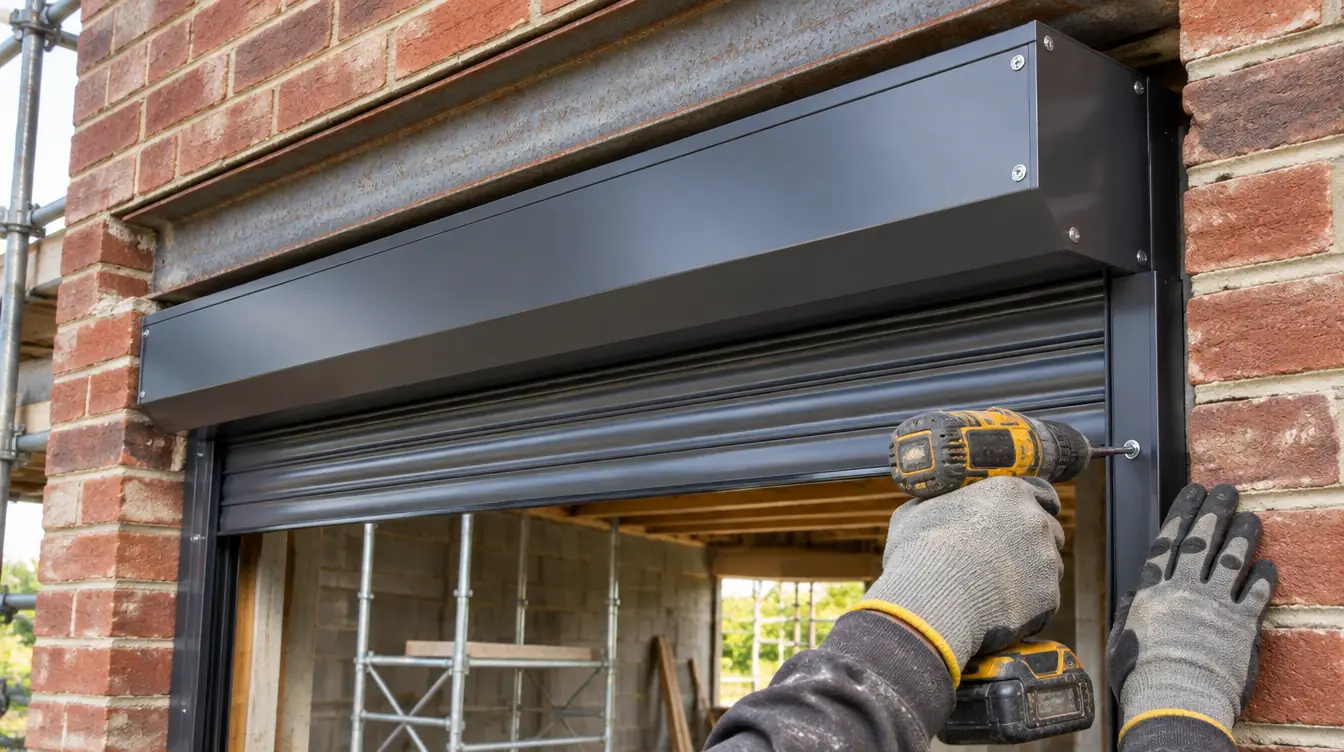
This is the most common option on existing buildings. The shutter box is fixed to the face of the wall just above the opening, and the guide rails are fixed to the face of the brickwork either side. It is quick to install and keeps the full width of the opening clear. The trade off is that the box is visible on the outside of the building and, if it is fitted under the lintel rather than above it, it takes some height out of the opening.
2. Fitted inside the reveal or behind the lintel
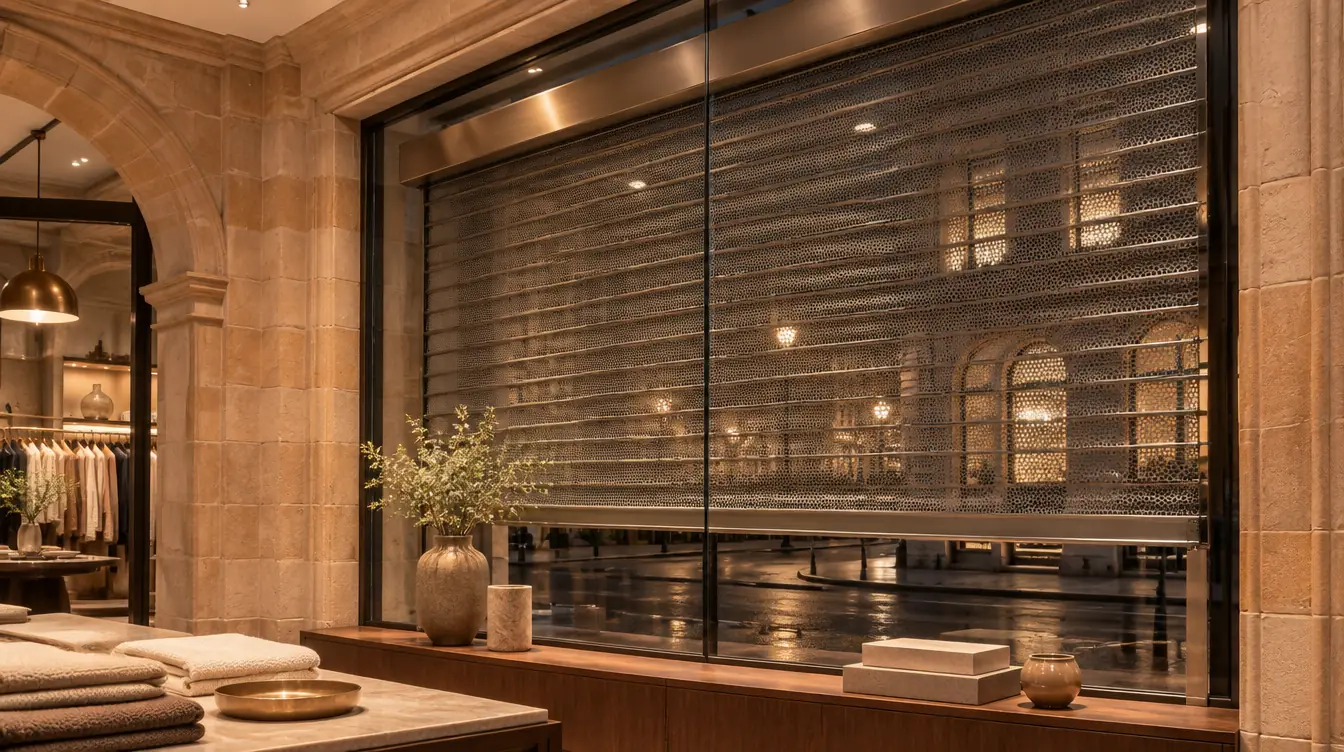
Here the box sits behind the lintel, inside the building, or tucked into the reveal of the opening. This gives a neater look from the street, which matters in conservation areas and on traditional sandstone frontages. You need enough depth behind the lintel for the coiled curtain, and the opening loses a little height because the curtain has to clear the underside of the lintel.
3. Lintel shutters with the box built in
On new builds and major alterations, you can specify a lintel that has a shutter housing integrated into it. The shutter sits hidden within the lintel line and only the bottom bar is visible when it is open. It is the tidiest option, but it has to be planned before the wall goes up and it is normally used for domestic windows and doors rather than large commercial openings.
How much space does the shutter box need?
The size of the box depends on the height of the opening and the profile of the laths. A taller shutter means a bigger coil, which means a deeper box. Insulated laths also coil to a larger diameter than single skin steel or aluminium. As a rough guide, small domestic shutters need far less room than tall commercial doors, so it is always worth having the opening surveyed before you finalise the lintel and ceiling heights.
Common problems we see on site
- Weak fixing surfaces. Old timber fascias, rendered blockwork and decorative stone can all be poor places to hang a heavy shutter box. We may need longer fixings, a steel subframe or a different position.
- Lost headroom. A box fitted under a low lintel can leave a garage door too low for a van, or a shop entrance that feels cramped.
- Cracked or failing lintels. If the existing lintel is cracked, sagging or badly corroded, it needs to be looked at before a shutter is added. We will flag it, but the repair is a structural job.
- No room behind the opening. Ceilings, beams, pipes and lighting can block an internal fit, which pushes you towards a face fixed box.
Which option is right for your building?
For most shops and industrial units in and around Glasgow, a face fixed or reveal fixed shutter works well and can be fitted without any building work. For new builds, extensions and garage conversions, it is worth thinking about the shutter when the lintel is being specified, because that is the only point where a fully hidden lintel shutter is easy to achieve. If you are in a conservation area or working with a listed building, an internal fit behind the lintel is often the most acceptable solution.
Get the opening surveyed first
Every shutter we supply is made to measure at our own premises in Glasgow, so we always start with a site survey. We check the lintel, the fixing surfaces, the headroom and the side room for the guide rails, then recommend the fixing method that gives you the best balance of security, looks and clear opening size.
Frequently asked questions
Can a roller shutter be fitted without a lintel?
The opening itself still needs a lintel or another structural support to carry the wall above it. Once that is in place, the shutter can be fixed to the wall face, into the reveal or behind the opening, so you do not need a special lintel unless you want the shutter hidden inside it.
Does a shutter box reduce the height of the opening?
It can. If the box is fixed under the lintel or the curtain has to clear the underside of the lintel, you lose some clear height. Fitting the box above the lintel on the outside, or using a lintel shutter, keeps more of the opening clear.
Who is responsible for checking the lintel?
The structure of the building is a matter for the owner, their builder or a structural engineer. During our survey we will point out anything that looks damaged or unsuitable for fixing to, so you can get it checked before the shutter goes in.