A perforated roller shutter lets some air through, but only a small proportion of its surface is actually open. That open proportion is called the free area, and each manufacturer publishes a figure for its laths. Standard perforated laths have a modest free area, while punched lath shutters and roller grilles let far more air through. If ventilation is a requirement, for example in a car park or bin store, you need to check the free area against the design, not assume any perforated shutter will do.
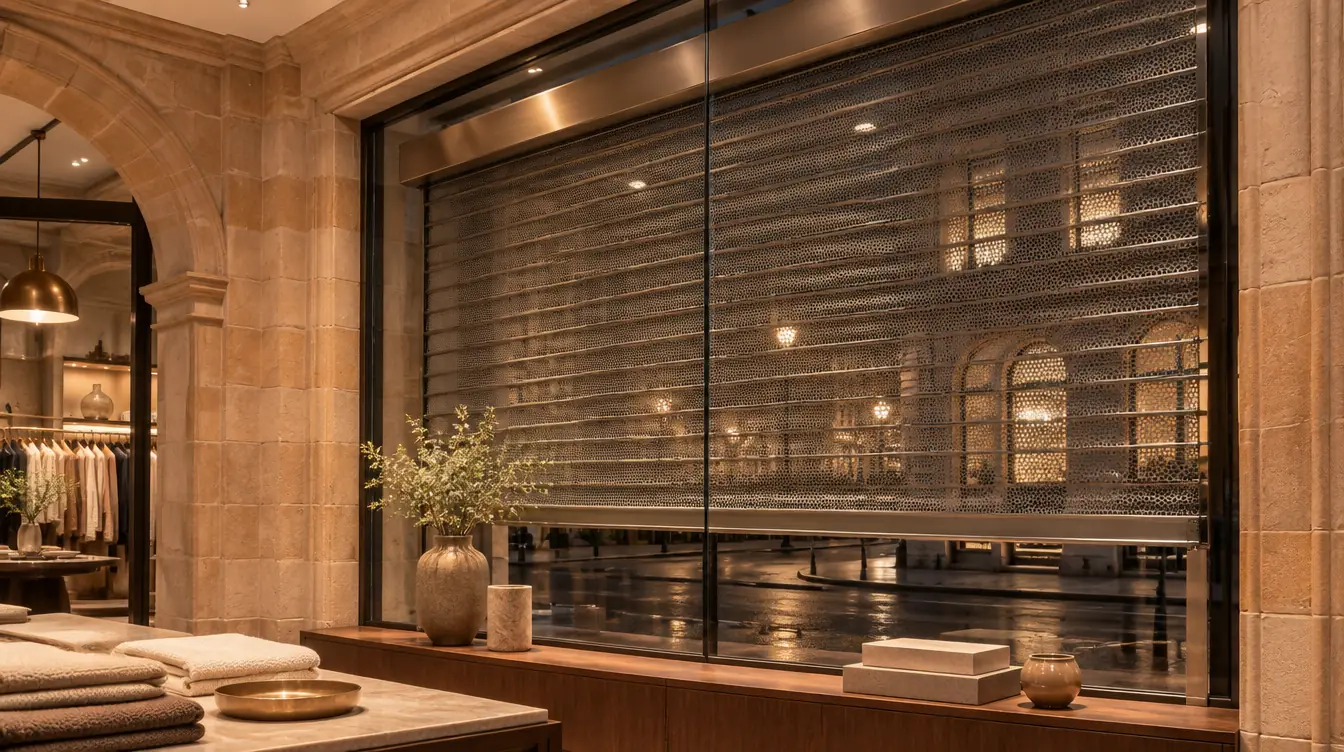
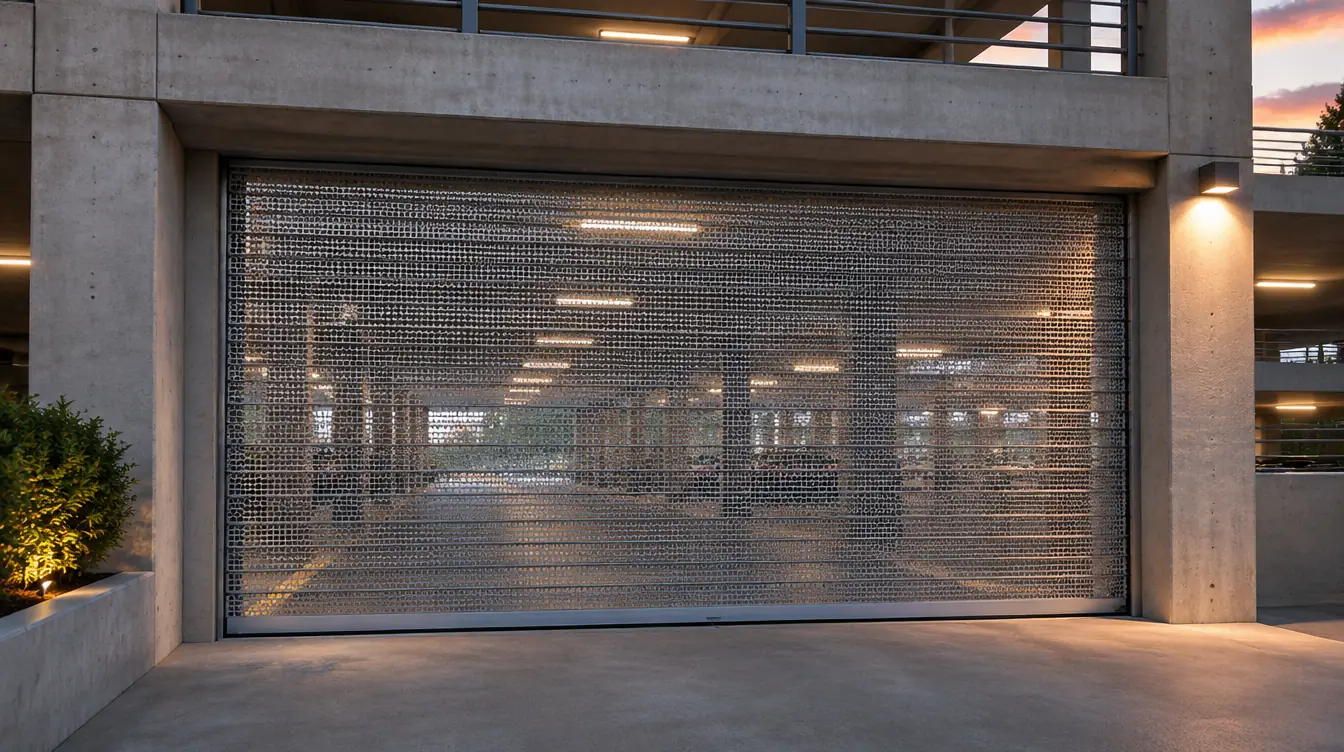
Perforated shutters are popular because they let people see into a shop at night while the glass stays protected. They are also used on car parks, bin stores, plant rooms and storage cages, where the opening needs to stay secure but still let air move. In those situations, how much air the shutter actually lets through can matter a great deal.
What is "free area"?
Free area is the proportion of a shutter's surface that is open to air. A perforated lath is mostly solid metal with a pattern of small holes punched through it. Even if the shutter looks quite open from a distance, the holes may only add up to a small percentage of the total area.
Manufacturers publish a free area figure for each lath profile, usually as a percentage. That figure is what a designer or building standards officer will look at, not how see-through the shutter appears.
How different shutter types compare
- Solid laths. No free area. Air only passes through small gaps at the edges.
- Perforated laths. A low free area. Good for visibility and light ventilation.
- Punched lath shutters. Larger slots cut into the laths, with a higher free area than standard perforations.
- Roller grilles and open mesh shutters. Mostly open, so they give the highest free area while still providing a physical barrier.
- Airflow or ventilation laths. Specialist profiles designed for higher airflow where ventilation is the main requirement.
Car parks: why the numbers matter
Enclosed car parks need ventilation to deal with exhaust fumes. Scotland's non-domestic building standards technical handbook sets out ways to ventilate larger garages. For natural ventilation, it describes wall openings on every storey of at least 1/20th of that storey's floor area, with at least half of that in opposite walls. It also gives mechanical and combined options.
If a roller shutter covers part of a car park's ventilation opening, its free area needs to be taken into account when working out whether there is enough ventilation. A perforated shutter that blocks most of an opening could leave a car park under ventilated. Your designer or the building standards service should confirm what is needed.
Other places free area matters
- Bin stores, to reduce smells and allow air to circulate.
- Plant and boiler rooms, where equipment may need air for cooling or combustion.
- Storage cages and cycle stores, where security is needed but a solid door would trap damp.
- Shop windows, where light and visibility matter more than airflow.
Security and free area are a trade off
More open area generally means less solid metal, which can mean less resistance to attack and less privacy. Grilles let lots of air through but also let people see and reach in. For high security sites, a specialist airflow lath or a combination of a solid shutter with separate ventilation may be the better answer.
Choosing the right shutter
- Find out if there is a ventilation requirement and, if so, how much free area is needed.
- Ask for the published free area of the lath you are considering.
- Balance it against security, privacy, weather protection and appearance.
- Confirm the choice with your designer or building standards officer where ventilation is a requirement.
We can help you specify it
We supply perforated, punched lath and grille shutters made to measure in Glasgow, for car parks, bin stores and commercial premises. Tell us what the opening is for and we will recommend the right curtain and provide the product details your designer needs.
Frequently asked questions
Are perforated shutters good for ventilation?
They let some air through, but standard perforated laths have a low free area. If ventilation is important, punched lath, grille or specialist airflow shutters let much more air through.
What is the free area of a roller shutter?
It is the percentage of the shutter surface that is open to air. Each manufacturer publishes a figure for its lath profiles.
Can I fit a shutter to a car park ventilation opening?
Yes, but the shutter's free area must be taken into account so the car park still meets its ventilation requirements. Check with your designer or building standards officer.