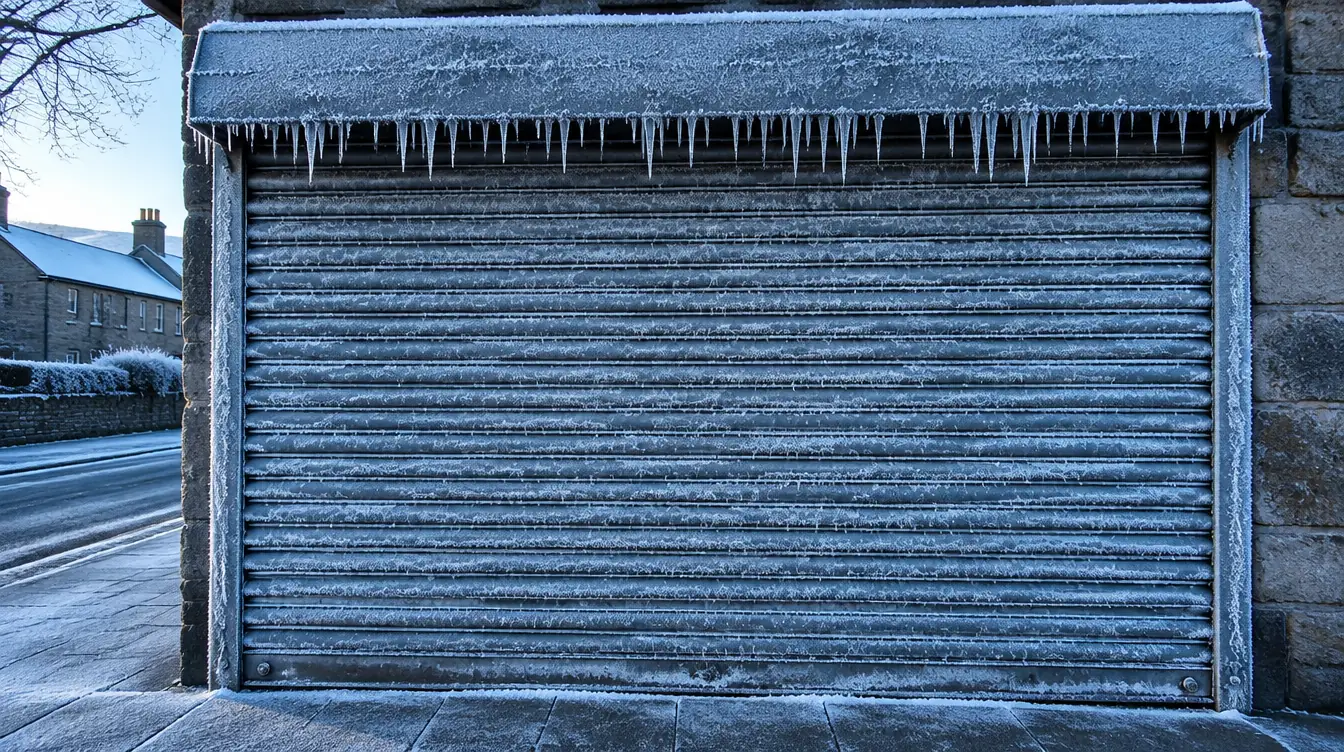
If your roller shutter is frozen shut, do not force it with the key switch, the motor or brute strength, and never pour boiling water over it. Isolate electric shutters, gently free the bottom rubber with lukewarm water or a suitable de-icer, clear ice from the guide rails, then try again once everything is moving. To prevent it, keep the bottom rubber and guide rails clean and dry, and have the shutter serviced before winter.
On a frosty morning in Glasgow, Paisley or Renfrew, a roller shutter that will not open can stop a business before it has started. Shutters freeze when water collects at the bottom of the curtain or in the guide rails and turns to ice overnight. The good news is that it is usually easy to deal with safely, and even easier to prevent.
Why roller shutters freeze
- The bottom rubber freezes to the ground. Rain, melted snow or puddles at the threshold freeze around the rubber seal.
- Ice forms in the guide rails. Water runs down the curtain into the rails and freezes, jamming the laths.
- Snow builds up against the shutter and adds weight or blocks the curtain.
- Condensation inside the box can freeze on the curtain or around the motor in very cold spells.
What not to do
- Do not keep pressing the switch. The motor will strain against the ice, and it can trip, overheat or damage the gearing. On some shutters the curtain can also unwind or buckle.
- Do not pour boiling water over it. It can damage seals and finishes, and the water will refreeze, often making the problem worse.
- Do not lever or kick the bottom bar. You can bend the laths or tear the bottom rubber and safety edge.
- Do not use a naked flame or heat gun near the shutter, rubber seals or wiring.
How to free a frozen roller shutter safely
- Isolate the power on electric shutters so nobody tries to run the motor while you work.
- Clear snow and ice from the threshold and along the bottom bar using a plastic scraper or brush.
- Thaw the bottom rubber with lukewarm (not boiling) water or a de-icer that is safe for rubber and painted metal, then dry off any water.
- Check the guide rails and gently remove any visible ice.
- Restore the power and try once. If the shutter still will not move, stop and call an engineer.
- Grit the threshold afterwards so meltwater does not refreeze.
How to stop your shutter freezing
- Keep the threshold clear and well drained. Water pooling at the bottom of the shutter is the biggest cause of freezing.
- Replace a worn bottom rubber. Split or flattened rubbers trap water.
- Clean the guide rails before winter so water and debris drain away.
- Use a suitable lubricant on the guide rails as recommended by your installer. Silicone based products are commonly used because they do not attract as much dirt as heavy grease.
- Operate the shutter in very cold spells if it has been left closed for days, so ice does not build up unnoticed.
- Book a pre-winter service. We check the bottom rubber, guide rails, limits and motor so the shutter is ready for the cold.
Manual shutters freeze too
Push up and chain operated shutters can freeze in exactly the same way. Resist the temptation to yank the handle or chain, because a frozen bottom bar can tear away from the curtain or bend the end laths. Free the bottom rubber and guide rails first, then lift steadily. If the shutter has a lock in the bottom bar, a squirt of lock de-icer before you insert the key saves a snapped key on a cold morning.
Is it frozen or is something else wrong?
Not every winter breakdown is ice. Cold weather also shows up worn springs, tired motors and failing batteries in remote controls. If the shutter is clear of ice and still will not open, or it runs but stops part way, the problem is likely mechanical or electrical, and it is time to call an engineer rather than keep trying.
Frozen shutter and your premises are not secure?
If your shutter has frozen part way, will not close, or the motor has stopped working after a cold night, we offer a genuine 24/7 emergency repair service across Glasgow, Hillington, Paisley and Renfrew. We can also replace worn bottom rubbers and safety edges to help stop it happening again.
Frequently asked questions
Can I pour hot water on a frozen roller shutter?
Use lukewarm water or a suitable de-icer, never boiling water. Boiling water can damage seals and finishes, and it refreezes quickly.
Will a frozen shutter damage the motor?
It can if you keep trying to run it. Isolate the power, free the ice, then try once. If it still will not move, call an engineer.
How do I stop my shutter freezing to the ground?
Keep the threshold clear and drained, replace a worn bottom rubber and have the shutter serviced before winter.