If your roller shutter does nothing when you turn the key, the usual causes are a loss of power or a tripped isolator, a worn or damp key switch, a loose or damaged cable, an overheated motor that has cut out, or a safety device stopping the shutter. Start with the simple, safe checks such as power and the isolator. If the shutter still will not move, call an engineer rather than forcing it.
There are few things more frustrating than turning the key at closing time and nothing happening, or arriving in the morning to a shutter that will not open. Key switch faults are one of the most common reasons we are called out, and the cause is often simpler than you might think. Here are the checks you can safely do yourself, and the signs that it is time to call us.
First, safety
Roller shutters are heavy, spring or motor driven and can cause serious injury. Do not open the shutter box, touch the motor or wiring, or try to force the curtain up or down. The checks below are all things you can do without tools.
Check 1: Is there power?
- Are the lights and other equipment working? A power cut will stop an electric shutter.
- Check the fuse board for a tripped breaker or RCD.
- Most electric shutters have an isolator switch near the shutter, often inside the building. Make sure it has not been switched off by a cleaner, contractor or by accident.
Check 2: Has the motor overheated?
Many shutter motors have a thermal cut-out. If the shutter has been opened and closed several times in a row, or the curtain is stiff and the motor is working hard, it can overheat and switch itself off to protect itself. Leave it for 20 to 30 minutes and try again. If this happens regularly, the shutter needs servicing because something is making the motor work too hard.
Check 3: Is the key switch itself the problem?
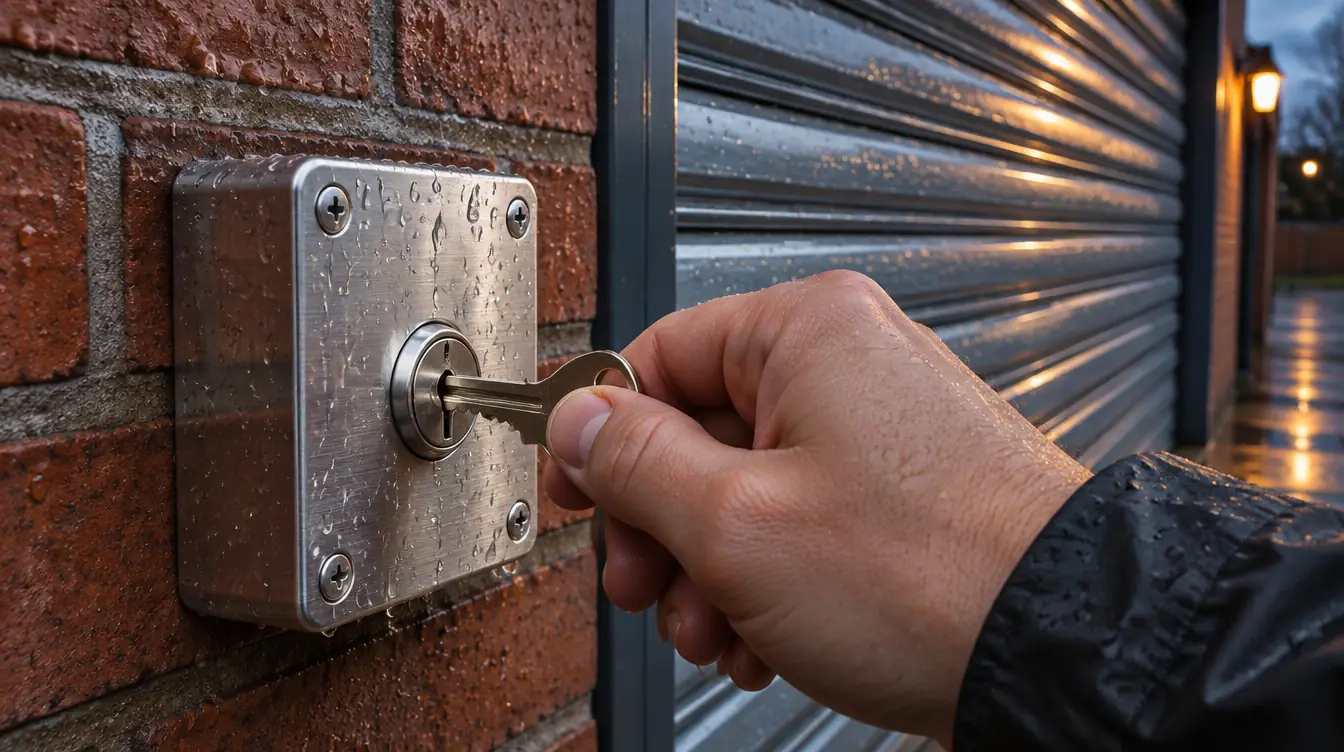
External key switches live a hard life, especially in the west of Scotland's weather. Common faults include:
- Damp or corroded contacts after heavy rain, which can stop the switch making a connection.
- A worn lock barrel that turns but no longer operates the switch inside.
- A bent or worn key. Try a spare key if you have one.
- Vandal damage, such as glue or debris in the keyhole.
- Loose wiring behind the switch plate.
Many key switches are "hold to run", meaning you must hold the key turned until the shutter has fully opened or closed. Releasing it too early stops the shutter, which can look like a fault.
Check 4: Is a safety device stopping it?
If your shutter has a safety edge on the bottom bar or photocells across the opening, anything touching or blocking them will stop the shutter or make it reverse. Check for:
- bins, stock, snow or debris under the shutter or across the beam;
- a damaged or torn bottom rubber or safety edge;
- dirty or misaligned photocell lenses.
Check 5: Does the remote or internal switch work?
If you have a second control, such as a remote, a push button inside or a keypad, try it. If the shutter works from another control but not the key switch, the fault is almost certainly in the key switch or its cable. If nothing works, the problem is more likely to be power, the motor, the control panel or the limits.
When to call an engineer
- The shutter hums but does not move.
- It moves part of the way and stops, or the curtain is crooked in the guides.
- You can hear grinding, clicking or banging.
- The key switch is damaged or the wiring is exposed.
- The shutter is stuck open and your premises are not secure.
Need it fixed quickly?
We repair key switches, controls and motors on all makes of electric roller shutter across Glasgow, Paisley and Renfrew, with a genuine 24/7 emergency service when your premises cannot be left unsecured. We can also upgrade to weather resistant key switches or add a remote control so you are not relying on a single switch.
Frequently asked questions
Why does my shutter stop when I let go of the key?
Many key switches are hold to run, so the shutter only moves while the key is held turned. Keep holding it until the shutter has fully opened or closed.
Can rain stop a key switch working?
Yes. Water getting into an external key switch can corrode the contacts or cause a short. A weatherproof switch or a cover helps prevent it.
Can I replace a key switch myself?
Key switches are connected to the mains powered control system, so replacement should be done by a competent electrician or shutter engineer.