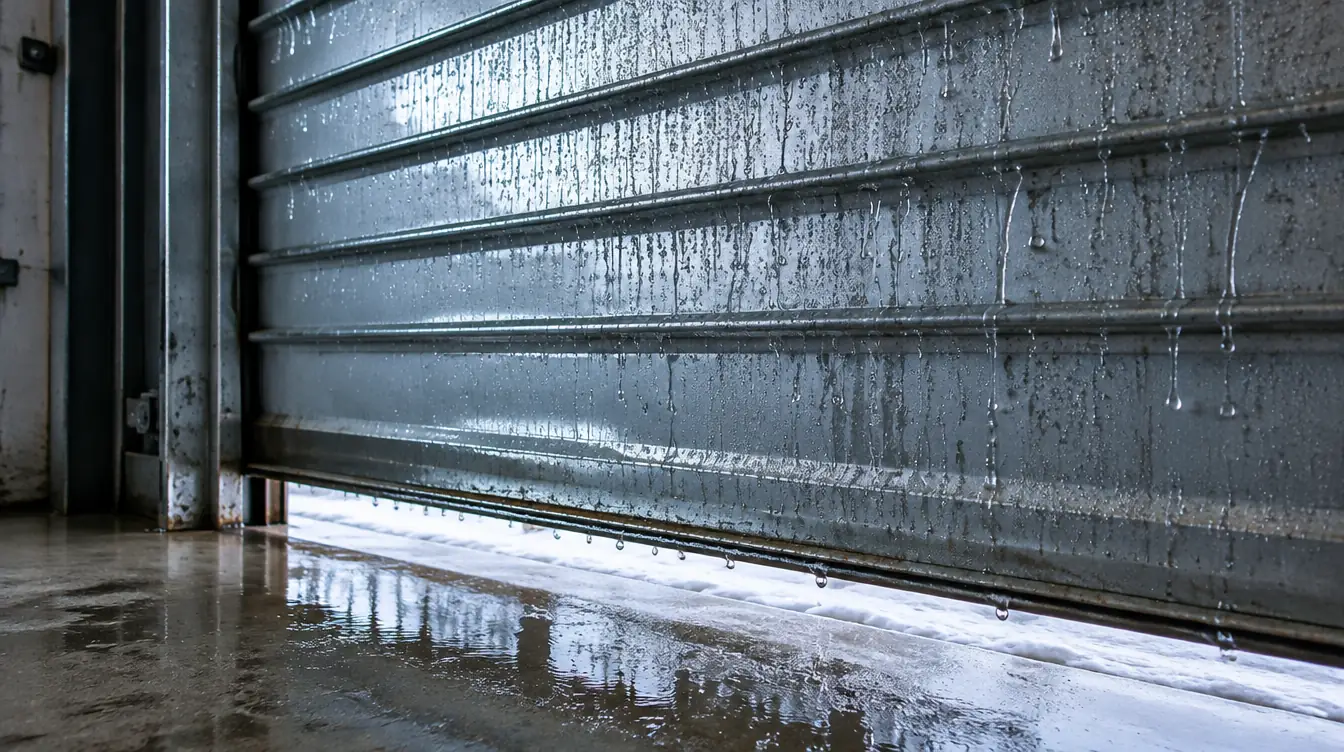
Condensation forms when warm, moist air inside your unit meets the cold metal of the shutter curtain. Single skin steel and aluminium shutters get very cold in winter, so moisture in the air turns to water on their inside face and drips down. The main fixes are reducing moisture in the air, improving ventilation and, for heated units, switching to an insulated roller shutter that keeps its inside face warmer.
On a cold morning, many business owners open up their unit to find water running down the inside of the roller shutter, puddles at the threshold and damp stock near the door. It looks like a leak, but in most cases it is condensation. It is especially common across the west of Scotland, where damp air and cold winters combine.
Why roller shutters sweat
Warm air holds more moisture than cold air. When warm, moist air touches a cold surface, it cools down and the moisture condenses into droplets. A single skin steel or aluminium shutter is a thin sheet of metal between the inside of your building and the cold outside. In winter its inside face can be close to the outside temperature, so it becomes the coldest surface in the room and the first place condensation appears.
What makes it worse
- Heating the unit without ventilation, so warm, moist air has nowhere to go.
- Moisture-producing activities, such as washing vehicles, cooking, wet processes, gas heaters or people working in the space.
- Wet vehicles or goods brought in from the rain.
- Poor ventilation in a sealed unit.
- Clear, cold nights after mild, damp days.
Problems condensation can cause
- water pooling at the threshold, creating slip hazards;
- damage to stock, packaging and equipment near the door;
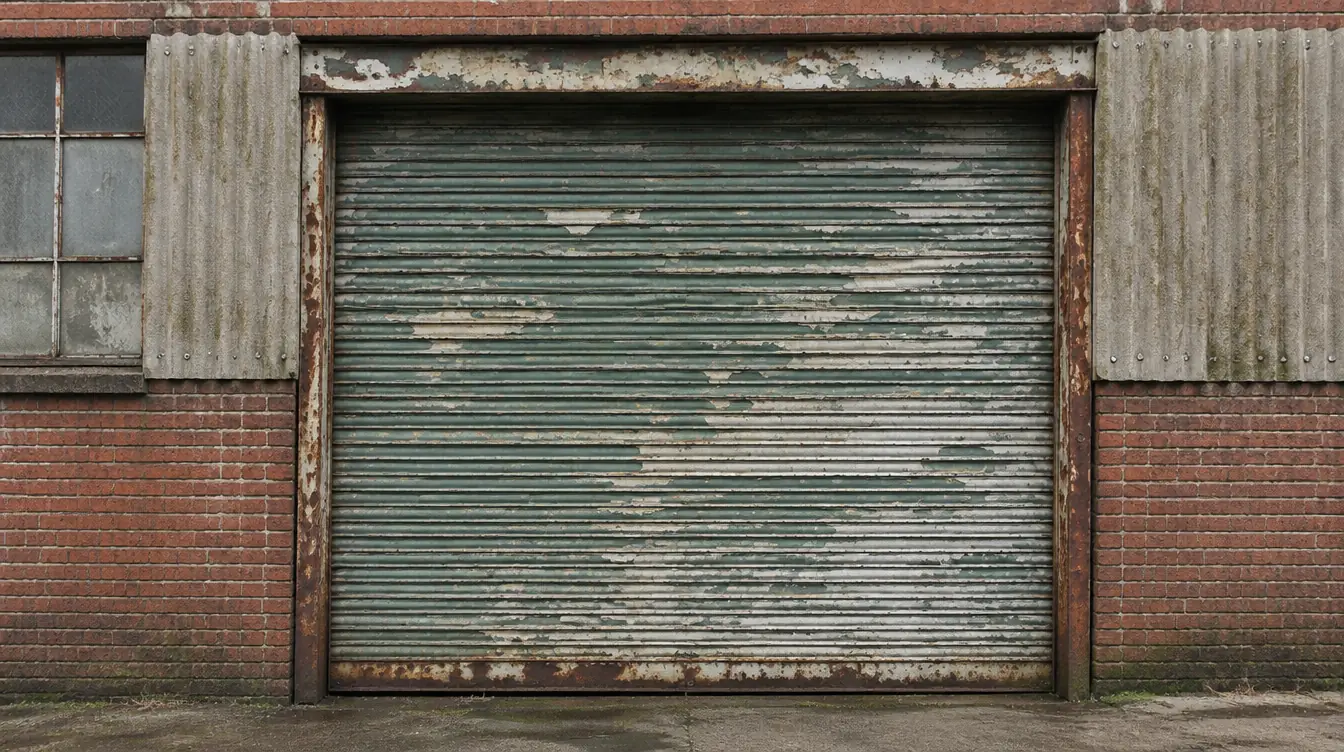
- corrosion of the shutter's laths, bottom bar and guide rails over time;
- water getting into motors, controls and key switches;
- ice forming at the bottom of the shutter in freezing weather.
How to reduce condensation
Reduce moisture in the air
Ventilate the unit, especially when doing anything that produces moisture. Extract fans, opening vents or running a dehumidifier in smaller spaces can all help. Avoid using portable gas heaters, which add a lot of water vapour to the air.
Keep air moving
Do not stack stock tight against the shutter. Leaving a gap allows air to move and helps the surface dry.
Switch to an insulated shutter
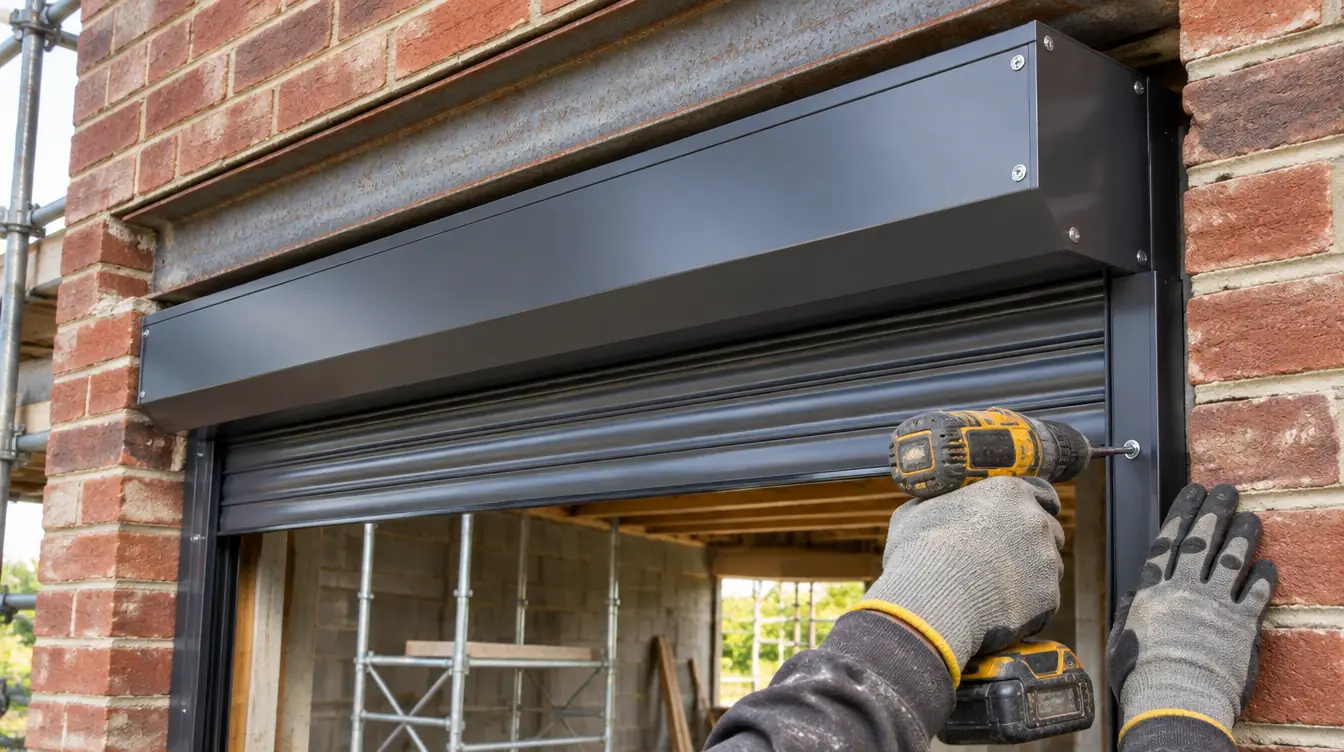
Insulated roller shutters use double skin laths filled with insulating foam. The inside face stays much closer to the room temperature, so condensation is far less likely. They also reduce heat loss, noise and draughts, which matters if your unit is heated or staff work near the door.
Seal draughts
Good brush seals in the guide rails and a sound bottom rubber reduce cold air entering around the edges.
Should you leave the shutter partly open?
Leaving a shutter slightly open can help air move, but it is rarely a good solution. It reduces security, lets in cold air and rain, and can leave the curtain exposed to wind. Proper ventilation through vents or extract fans, or switching to an insulated shutter, usually works better.
Looking after a shutter that suffers from condensation
- wipe down and dry the bottom bar and threshold after very wet mornings;
- check the bottom rubber and guide rails for corrosion during servicing;
- make sure key switches and control panels are suitably sealed;
- treat any rust spots early before they spread.
Is it condensation or a leak?
Condensation forms evenly across the inside face of the shutter and is worst on cold mornings. Water that appears only after rain, or comes from the top of the shutter or the box, may be a leak around the opening or the box. If you are not sure, we can check.
Upgrade to an insulated shutter
We make insulated roller shutters to measure at our own premises in Glasgow and fit them across Hillington Park, Renfrew and the wider area. If condensation is damaging stock or causing slips, we can assess your unit and recommend whether insulation, better seals or ventilation will solve it.
Frequently asked questions
Why is my roller shutter wet on the inside?
It is usually condensation. Warm, moist air inside the unit condenses on the cold metal of the shutter, especially on winter mornings.
Do insulated roller shutters stop condensation?
They greatly reduce it, because the inside face of an insulated curtain stays much warmer than a single skin metal shutter. Good ventilation still helps.
Can condensation damage my shutter?
Over time, yes. Constant moisture can cause corrosion of the laths, bottom bar and guide rails, and water can get into motors and controls.